
Seán an Seanchaí:
The Year in Review 2024

2024 was the first calendar year I’ve spent at the scríbhneoireacht business. However, perhaps scríbhneoireacht is not the best word for it at all.
Is scríbhneoir mé, ultimately, but evidently, the Seán an Seanchaí project has snowballed this year into something more.
The year began with a transfer of funds raised through Dlúthpháirtíocht, to Cairde na Palaistíne, who used the money to evacuate a family out Gaza and into Egypt. Shortly after, we held a fundraiser in Madden’s bar- the best pub in Belfast City Centre. I was stressed on the day, having no experience and a small crowd to help me. But when all was said and done, it was a grand job all the same.
At the end of January, I was kindly asked by the popular Irish artist, Spicebag, to recite If I Must Die, a poem by the late Refaat Alareer, who was murdered in Palestine by the Israeli occupation in 2023. Spicebag had the job of putting a mural on the Free Derry wall to commemorate Bloody Sunday, and he used Alareer’s words to do so. You can watch the short and powerful video depicting the commemoration here.

Dlúthpháirtíocht session in Madden’s (Credit: Brian Lincoln)
The first of February saw the launch of the Seán an Seanchaí Substack. As well as what you’re reading now, you’ll find published there- nine articles, two singular short stories, a three-part short story, five miscellaneous pieces, a poem, and a play. I’ve found the platform to be useful and would encourage other writers to get themselves onto it.
In March, I was interviewed by Cearbhall Ó Siochain for RTÉ Gaeilge- a fairly big deal for me at the time, and a handy way to promote Grúpa Léitheoireachta agus Scríobhnóireachta (GLAS) which launched in the same month.
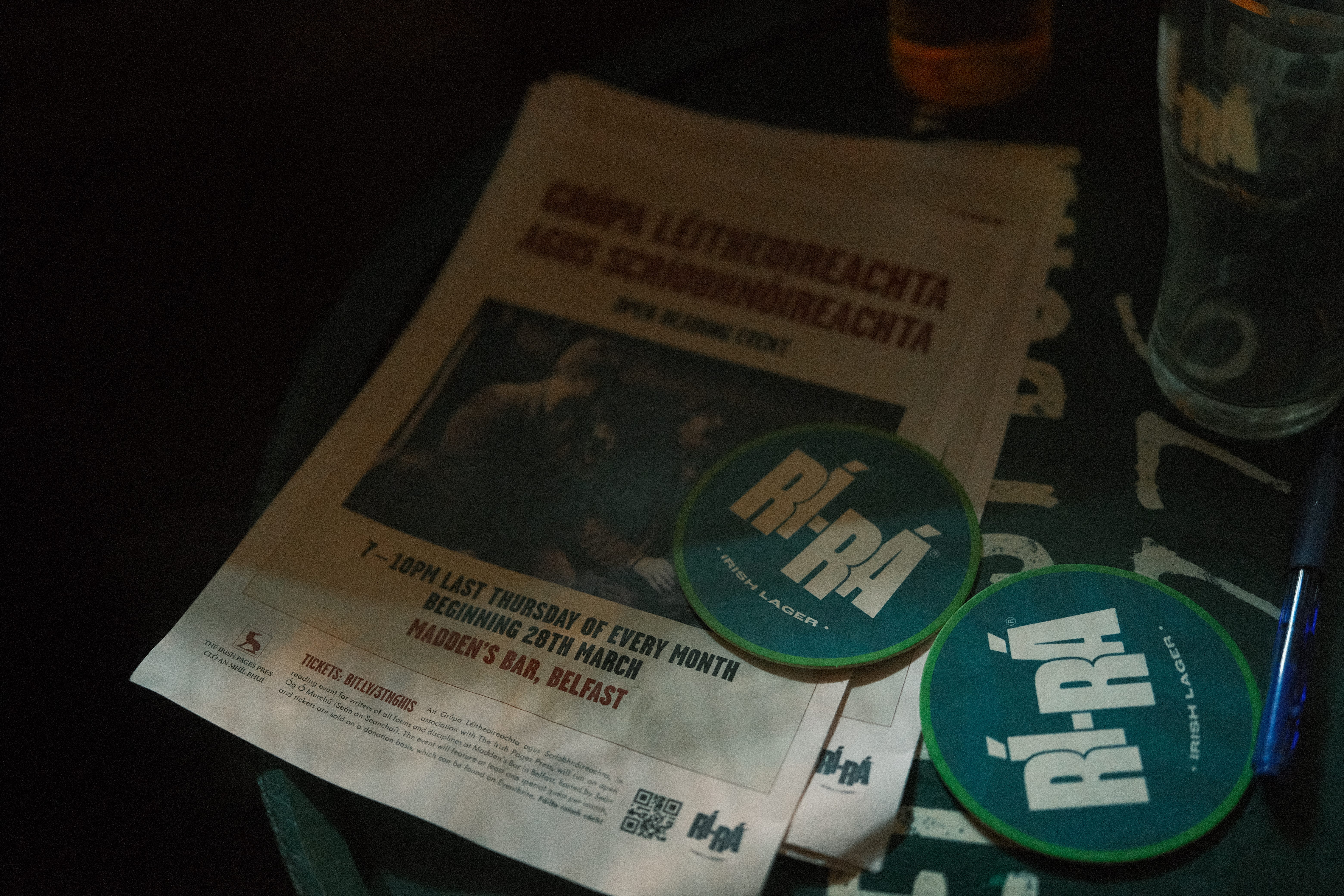
Grúpa Léitheoireachta agus Scríobhnóireachta (Credit: Brian Lincoln)
GLAS came off the back of the fundraiser’s success. Once a month, I’d invite one or two writers whose work I’m fond of, some of which included Mikey Cullen, Aoibh Johnson, and Derry artist, Squarebear. These invited guests would read their work alongside open mic slots. The event was kindly sponsored by Rí-Rá Irish Lager, for which I’m extremely grateful, as I am to Bamber in Madden’s, who helped me develop the idea and hosted it the event.
I’m very proud to have platformed so many emerging writers through GLAS, particularly, members of marginalised communities. GLAS proudly welcomed people from many backgrounds, nationalities, and orientations, we welcomed people with both mental and physical conditions and disabilities, and I think there may even have been a protestant or two at some time or other!
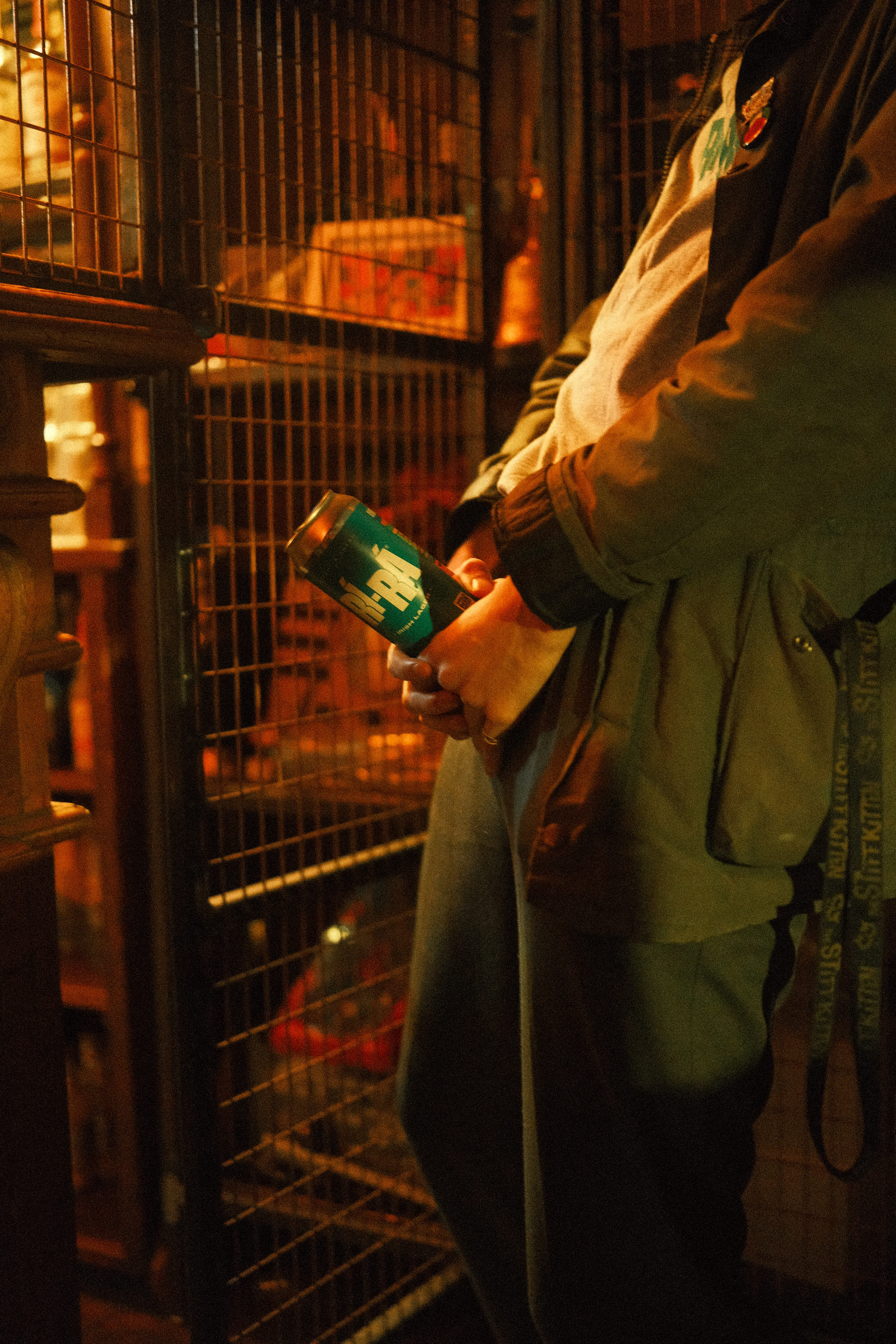
Rí-Rá yup out of it (Credit: Brian Lincoln)
It was April then, when Fortnight@51 published an article I wrote about the Dlúthpháirtíoch project. This was the first time someone had paid me to write a piece, and the first time my work had been printed. For this I’m very grateful to Niamh McNally, who edited the issue.
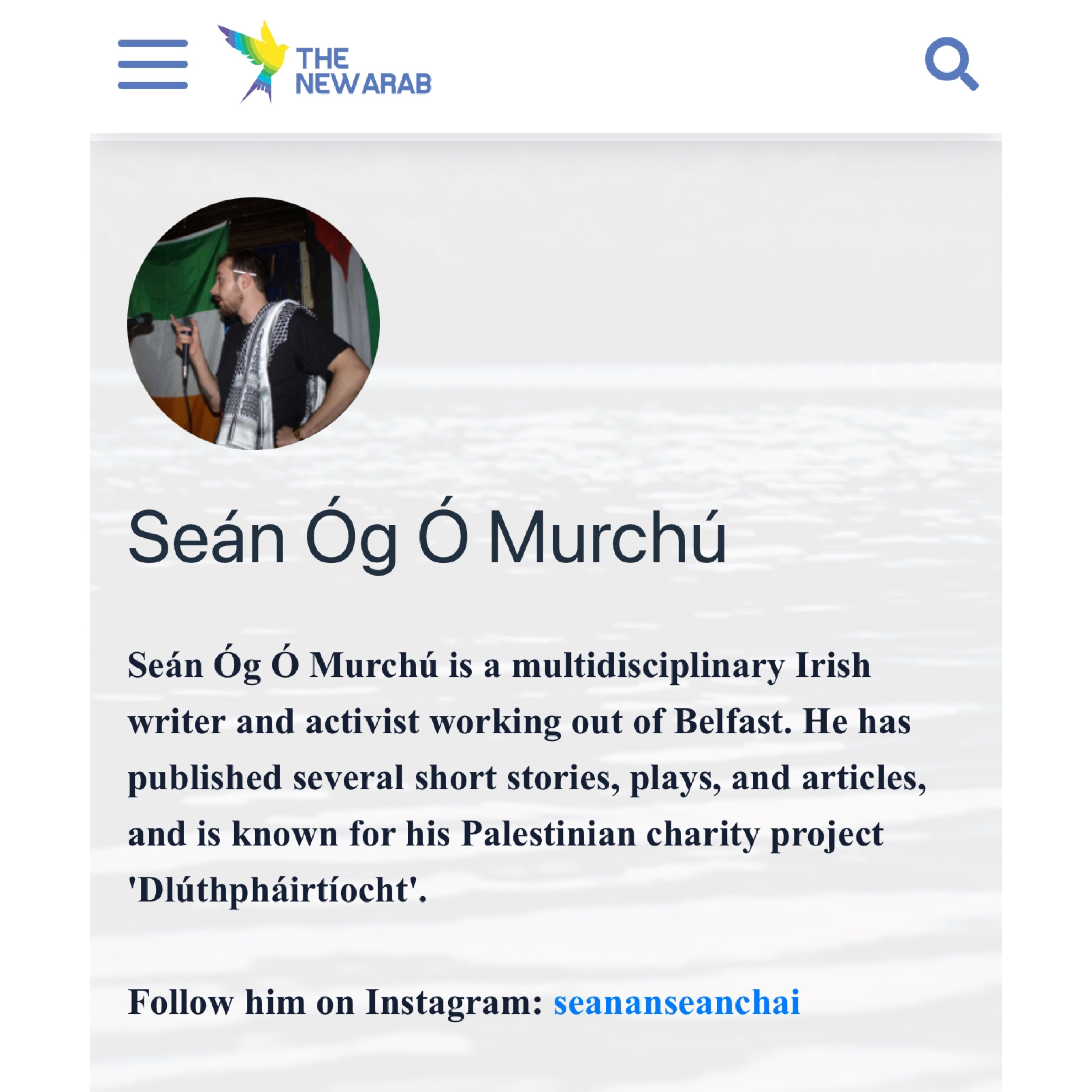
May brought more published work. This time an article in The New Arab. I’m not a fan of Sinn Féin, so being paid to rant about their abhorrent foreign policy after them going to America for Paddy’s day was some buzz.
It is also in this month that I took to writing what you might describe as diss-poems. I became interested in how a little bit of writing could cause a lot of upset, and how, sometimes, people being upset was just and fair.
The first diss-poem I fired out was one critical of Trinity College’s provost, Linda Doyle after students had to force her via an encampment (power) to adopt a more-humane-less-insane policy on Israel’s genocide in Gaza. The poem was a fart in the wind. It did very poorly, mostly due to Instagram’s clamp down and censorship on content relating to Palestine.
The following month, however, I wrote another provocative poem, about multiple serious allegations against a very popular Irish rapper, and read it in front of his family and friends. All I’ll say now about that, is that the poem did the job it was written to do, and I could give less of a fuck now than I could at the time about the people who were upset about what I wrote.
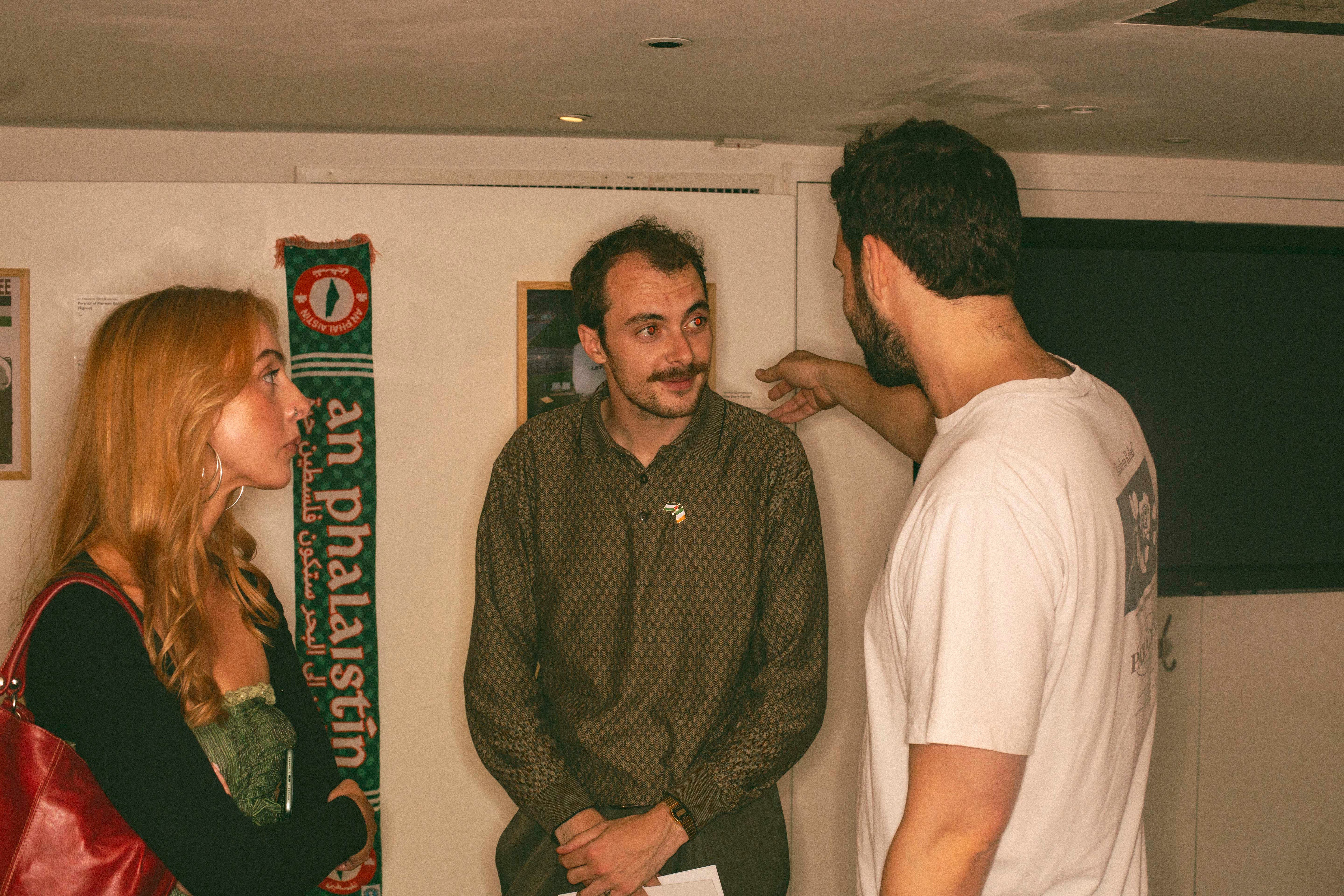
London (Credit Daragh Drake)
Dlúthpháirtíocht expanded then. What began as a poem, had turned into a collection, and then in July, it became the largest-ever international exhibition of contemporary Irish artists. P21 Gallery in London hosted the nine-day event, and although we may have bitten off a small bit more than we could have chewed at the time, it’s difficult not to see the thing as having been a success.
The project has been fairly well documented, with articles in RTÉ and District, by Cearbhall Ó Siochain, and Izzy Copestake respectively. So, I’ll use this space to thank all the artists and contributors, particularly Daragh Drake, without whom the Exhibition would never have existed. Daragh and I are putting together a statement to be released early in the new year showing what we are doing with the money raised.
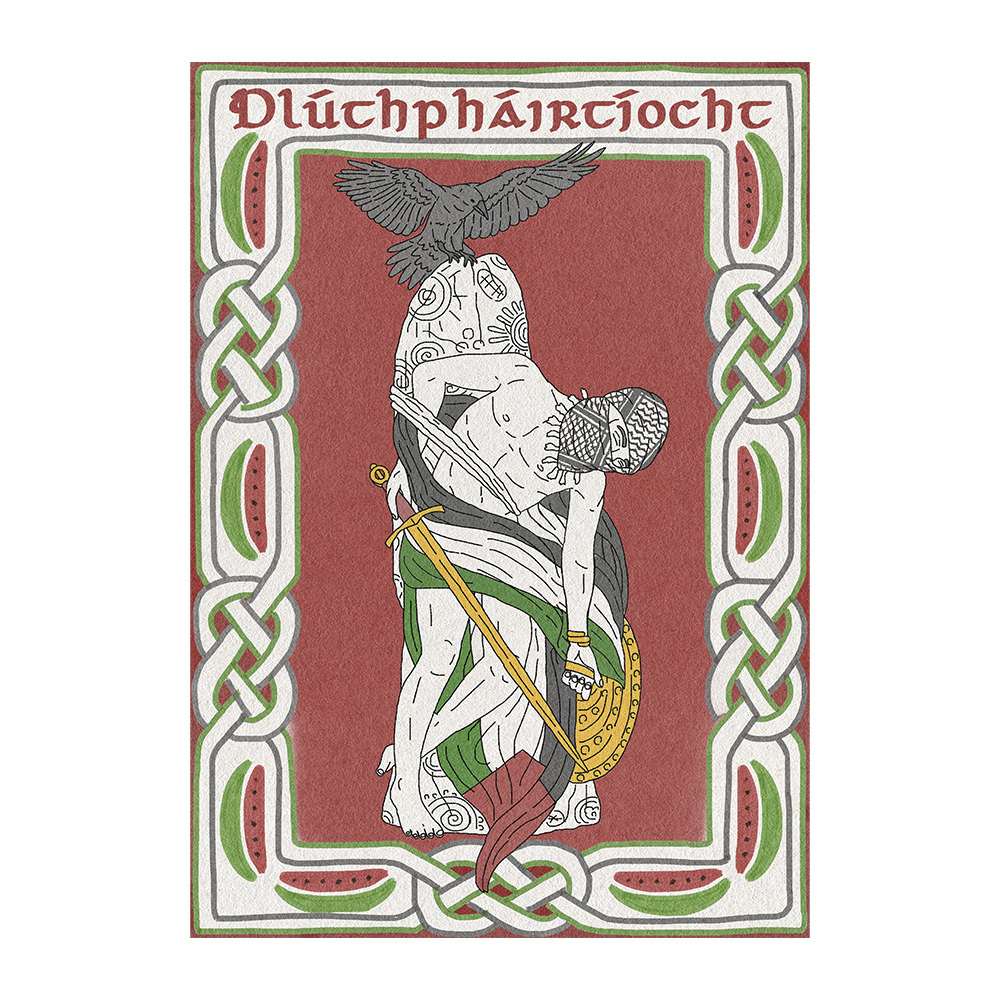
Dlúthpháirtíocht by Diabhal
Things became quieter then, from August until now- calmer. I was interviewed by Liana Nic an tSaoir for View Digital, and aside from that, I focused mainly on writing for the Substack right up to the end of the year. I lost my Instagram account to a mysterious copyright claim which made it a bit more difficult to get things out there- but sure look!
At the time of writing, the Substack has amounted just shy of nine thousand reads in ten months, with this piece of work likely to take the reads beyond that 9k figure. The most popular piece was ‘Responsility for Suffering’ a deeply personal bit of work that drew on a remarkable and touching amount of support.

And so, while I won’t give too much away about what I have planned for 2025, I will say that I am extremely excited to get back to work.
Mo mhíle buíochas agus grá mhór to every one of you who have supported my work and taken the time to read my articles and stories. I am very, very happy to be at the scríbhneoireacht business- and the business that Seán an Seanchaí has become.
That's some year, Seán! Onwards and forwards ✊